The music
Mugham, the tar and the kamancha: the sounds behind a Baku evening
The classical tradition Azerbaijan has put on UNESCO's lists, the two string instruments at its heart and how they relate to the live music at a dinner show.
Hold my table ↗Quick answer
Azerbaijan's best-known musical tradition is mugham, a form that mixes classical poetry with improvisation inside a set of modes, and its signature instruments are the tar, a plucked lute, and the kamancha, a bowed spike fiddle. The Baku dinner show's page promises live Azerbaijani music and does not publish a programme, so you cannot count on a full mugham performance. What you can count on is that these are the instruments and traditions the country's folk and classical music is built from.
What mugham is
Wikipedia describes mugham as a compound composition of many parts, mixing classical poetry with improvisation in local modes, where the improvisation follows strict rules tied to each mode. It lists seven main modes: Rast, Shur, Segah, Shushtar, Bayaty-Shiraz, Chahargah and Humayun. Performances can last hours, and the article calls the form a poetic and musical exchange between performers and initiated listeners. Wikipedia records that UNESCO named mugham a masterpiece of intangible heritage in 2003 and put it on its Representative List in 2008. That depth is why a casual dinner programme is a different thing: a restaurant evening is built around food and variety, and a full mugham session asks for quiet and time.
The tar
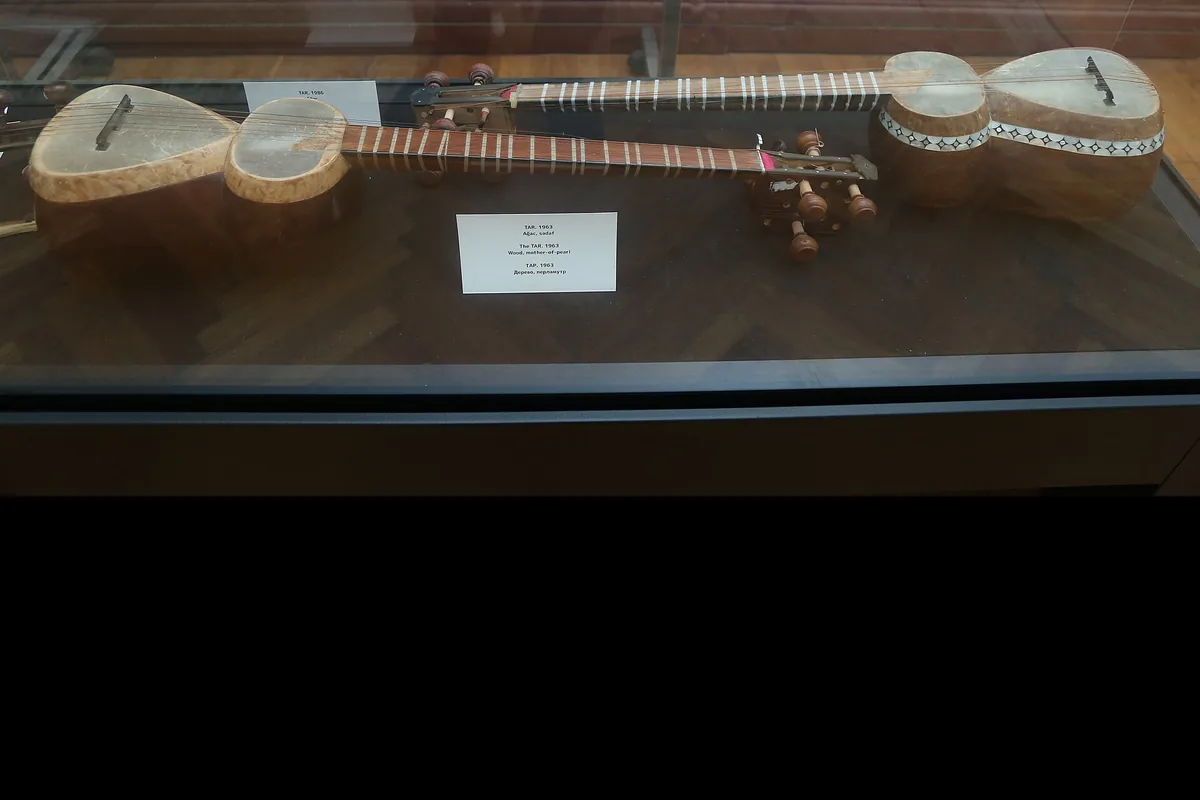
The tar is the plucked lute at the centre of Azerbaijani music. Wikipedia says the Azerbaijani version has eleven playing strings producing seventeen tones, plus an extra bass string and usually two doubled resonance strings. Its double-bowl body is carved from mulberry wood and covered with a thin membrane, which in the Azerbaijani instrument is ox pericardium. The article credits Sadigjan, or Mirza Sadiq Asad Oglu, with developing the modern form in the 1870s. UNESCO added the craftsmanship and performance of the tar to its intangible heritage list in 2012. If a musician plays a plucked, ringing line at your dinner, this is the instrument most likely to be behind it.
The kamancha
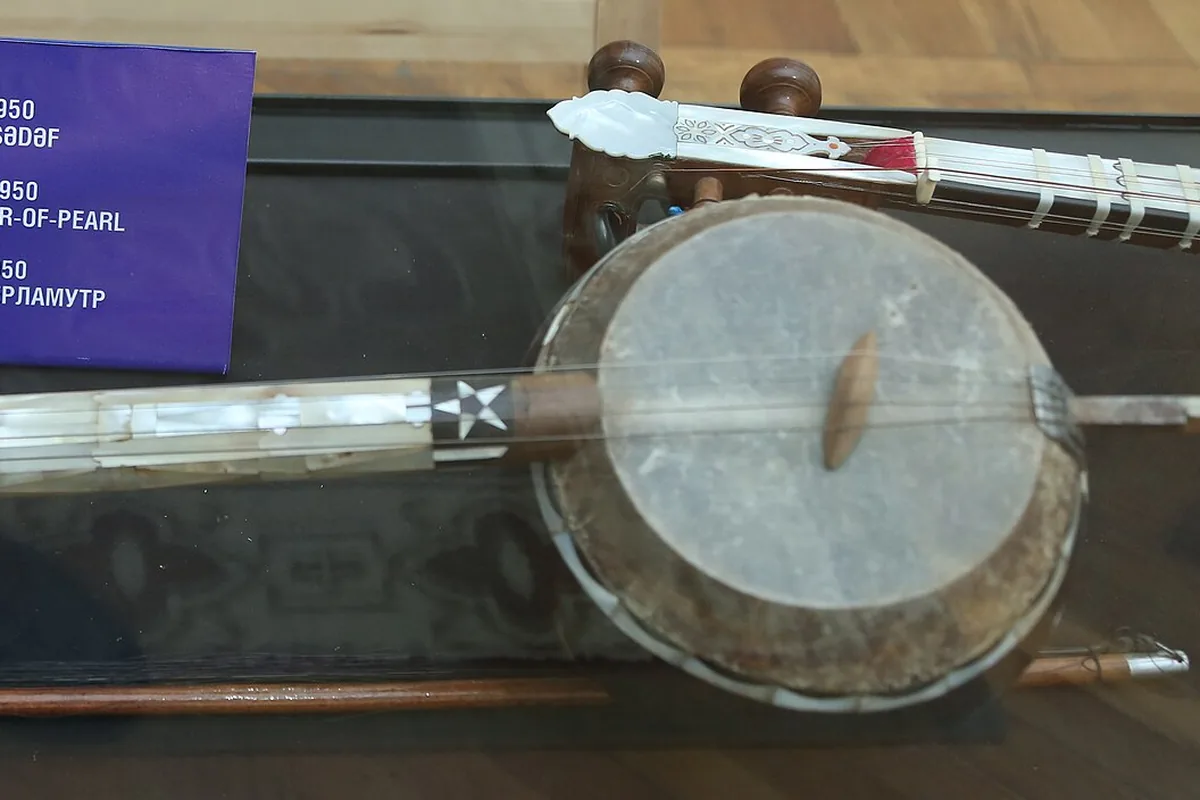
The kamancha is a bowed instrument with a spike that rests on the player's knee. Wikipedia says traditional ones had three silk strings and modern ones usually have four metal strings, with a bowl-shaped body covered by a membrane, often lamb or goat skin. The Azerbaijani version, spelled kamança in Azerbaijani, differs slightly in structure from the Iranian one, and UNESCO inscribed the craftsmanship and performance of the kamancha in 2017 as a joint listing for Azerbaijan and Iran. Its sound is closer to a voice than a guitar, which is why it is often paired with the tar.
The frame drum and the ensemble
A caption on Wikipedia's mugham article shows a Baku group with tar, daf and kamancha, and the article lists the daf, tar, kamancheh, balaban, qanun, oud, çeng and naqareh among typical instruments. The daf is a frame drum that keeps the rhythm. Whether the musicians at your dinner use these instruments is up to the restaurant; the page names live Azerbaijani music and nothing more specific.
What to listen for
At a dinner, listen for the contrast between the plucked, bright tar and the sustained, singing kamancha, and for how the rhythm changes when the dancers come out. A mugham passage tends to be free and improvised, going by Wikipedia's description of strict modes with room for improvisation, while dance music is steady and rhythmic. Applause between pieces is normal in a restaurant, so there is no need to stay silent. If the music grabs you after the evening, a mugham concert or recording will give you the unhurried form, and the instruments above will be easy to recognise by then.
Frequently asked questions
Will I hear mugham at the dinner?
The booking page promises live Azerbaijani music and publishes no programme, so a full mugham performance is not something it states.
What is the difference between the tar and the kamancha?
The tar is a plucked lute with a double-bowl body, and the kamancha is a bowed fiddle with a spike, says Wikipedia.
Is mugham on a UNESCO list?
Yes: proclaimed a masterpiece in 2003 and added to the Representative List in 2008, according to Wikipedia.
Sources